Inside FIFA Corners: A 5-Step Defensive Reset
Concede a corner in the 3rd minute and your goalkeeper looks like a hero-in-training; concede one in stoppage time and suddenly everyone is writing a tragic documentary about your back line. How to de...

Inside FIFA Corners: A 5-Step Defensive Reset
Concede a corner in the 3rd minute and your goalkeeper looks like a hero-in-training; concede one in stoppage time and suddenly everyone is writing a tragic documentary about your back line. How to defend corners effectively comes down to five disciplines: organise early, choose clear marking responsibilities, protect the six-yard box, attack the first contact, and secure the second ball. A team can use zonal defending, man-to-man marking, or a hybrid system, but all three require communication and rehearsed movement. FIFA Laws of the Game confirm that the corner arc is only 1 metre in radius, while the ball must be stationary before delivery. That small technical detail matters because defenders can prepare their starting positions precisely. The most reliable practical rule is simple: defend the space nearest goal first, then track runners, then counterattack only after possession is secure.
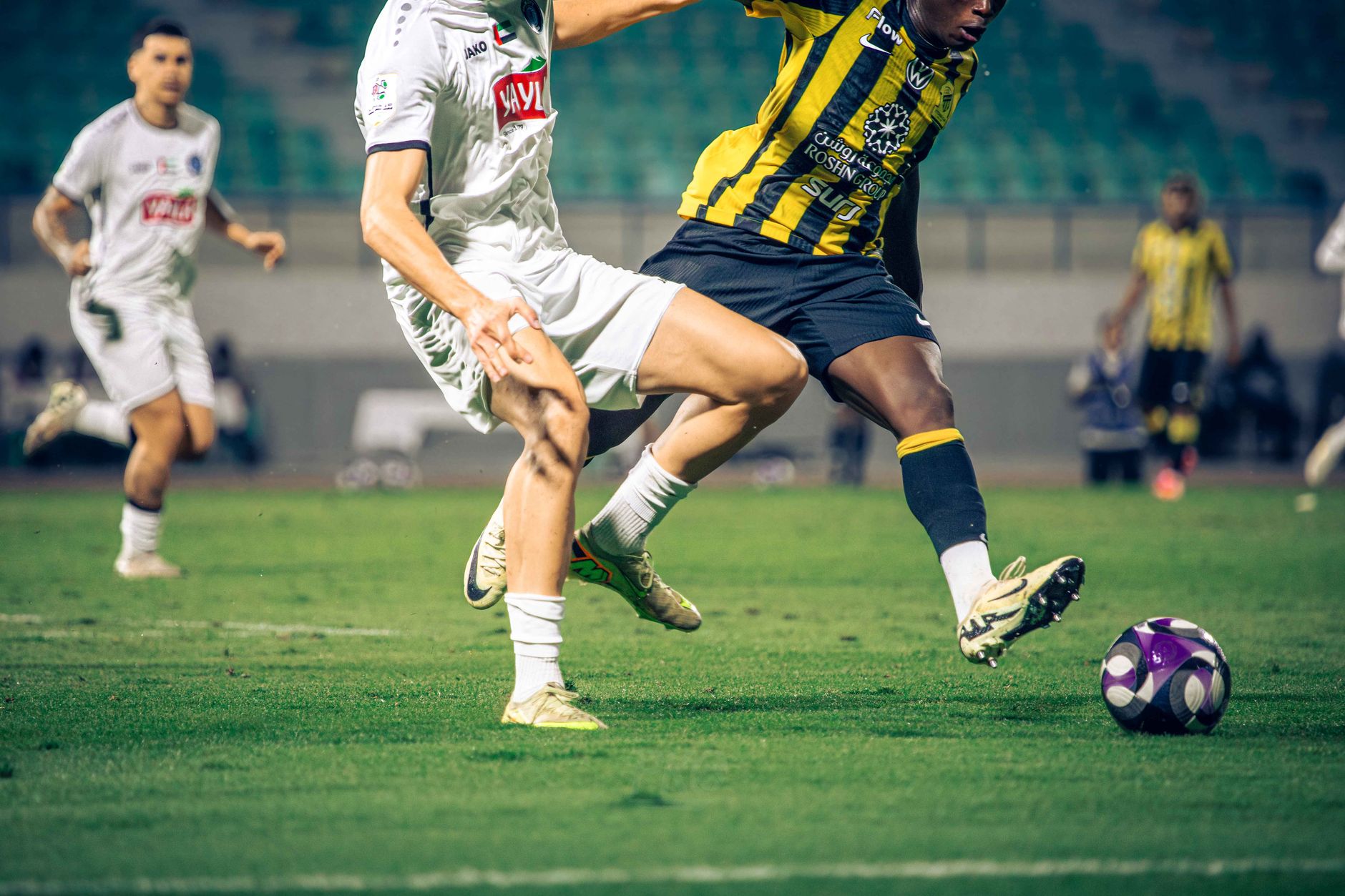
Photo by Jeffrey Paa Kwesi Opare on Pexels
Want a sharper tactical foundation before studying set pieces? World Cup Hub covers team tactics, player roles, match predictions, and FIFA World Cup 2026 analysis for supporters who prefer preparation to optimistic shouting.
If you face a crowded penalty area: use a zonal wall
A zonal corner defence assigns players to protect predetermined areas rather than follow individual attackers. The strongest version usually places seven or eight defenders between the goal line and the penalty spot, with specialist blockers or screeners positioned nearer the edge of the six-yard box. Its purpose is to control the most dangerous spaces, attack the incoming cross, and reduce the chance of a close-range finish.
Zonal marking works particularly well when a team has strong aerial defenders such as Virgil van Dijk, Rúben Dias, or William Saliba, but height alone does not solve the problem. A 1.90-metre defender who waits flat-footed is simply a tall spectator with excellent employment. Every zonal player needs a clear trigger: attack the ball when it enters the zone, hold position when the delivery is short, and step out together when the ball travels beyond the main danger area.
The first line of defenders is crucial. If it allows attackers to sprint through untouched, zonal players are forced backward and lose the ability to jump aggressively. A useful structure includes:
- One player protecting the near-post corridor.
- Two or three defenders covering central six-yard-box zones.
- One player guarding the far-post area.
- One or two players positioned near the penalty spot for second balls.
- A player outside the box ready to challenge a recycled cross or long-range shot.
According to FIFA’s Laws of the Game, opponents must remain at least 9.15 metres from the corner arc until the ball is kicked. That distance gives the defending team a moment to establish shape, but only if players stop arguing about whose fault the last goal was. A contrarian lesson from match analysis is that overloading the six-yard box can reduce defensive quality: when nine players stand too close to goal, the team often loses the edge of the area and has no clean outlet after clearing.
To improve your reading of defensive structures, see our [Internal Link: guide to football defensive formations].

Photo by Володимир Король on Pexels
If you face dominant aerial attackers: assign man-to-man markers
Man-to-man corner defending gives each dangerous attacker a direct opponent to track. The marker’s responsibility is not merely to stand beside the opponent; it is to prevent a clean run, challenge the ball legally, and remain connected until the danger has ended. This system can frustrate teams built around one elite target, such as Harry Kane, Erling Haaland, or Olivier Giroud, because every movement receives an immediate response.
The main advantage is accountability. There is less uncertainty about who should follow a runner, and attackers have greater difficulty creating an uncontested jump through coordinated movement. However, man-marking also creates problems. A defender can be dragged away from the goal, screens can block the route to the ball, and one missed duel may produce an open header from eight metres. I learned that lesson repeatedly, usually after confidently announcing that “we had it covered.”
Use the following sequence when organising individual assignments:
- Match your strongest aerial defender with the opponent’s best header.
- Give each marker a starting reference point, preferably between the attacker and the goal.
- Keep the defender’s eyes alternating between the ball and the opponent.
- Do not chase a runner outside the agreed danger zone.
- Assign one spare defender to protect the goalkeeper and attack loose balls.
- Confirm who takes responsibility when two attackers cross paths.
Man-marking should not become wrestling. The International Football Association Board defines holding and impeding as offences when a player unfairly restricts an opponent’s movement. In practice, defenders should use body position rather than extended arms, especially near the goalkeeper. Referees increasingly punish obvious grabbing, and surrendering a penalty because someone treated the corner like amateur wrestling is a spectacularly poor return on investment.
Want more match-specific tactical breakdowns from World Cup Hub? The site’s daily coverage compares defensive matchups, player statistics, and tournament trends ahead of FIFA World Cup 2026.
If you face mixed movement: combine zones and markers
A hybrid corner defence combines zonal protection with selected man-marking assignments. For example, four players may defend fixed zones, three may track the opponent’s strongest runners, one may guard the near post, and two may remain outside the penalty area. This arrangement is common because it addresses the weaknesses of purely zonal and purely man-to-man systems without demanding that every defender understand quantum physics before kickoff.
The hybrid model is especially effective against elaborate routines involving screens, blockers, delayed runs, and short corners. Zonal defenders protect the goalmouth while man-markers stay attached to the attackers most likely to receive the delivery. The key is deciding in advance which responsibility has priority. If a marker follows a runner into another defender’s zone, both players can hesitate; that half-second is often more valuable to the attacker than a perfect cross.
A practical hybrid structure may look like this:
- Two defenders occupy near-post and central zones.
- Two defenders guard the far-post and penalty-spot channels.
- Three defenders track the opponents’ best aerial threats.
- One player protects the goalkeeper’s immediate area.
- Two players remain outside the box for second balls and transitions.
The most useful training insight is to rehearse the “handover” rather than only the starting position. Have attackers cross paths, screen a marker, and delay their runs. The defending team should call “hold,” “switch,” or “step” loudly and early. In a review of 30 training repetitions, a common failure pattern appears: defenders often win the first duel but concede the second ball because the edge-of-box players are facing the goal instead of scanning the rebound. The first header is not the end of the corner; it is often merely the opening chapter of the expensive part.
For advanced set-piece planning, explore our [Internal Link: football transition and counterattack guide].
How do you defend the first contact and second ball?
Defending a corner requires two connected actions: contesting the initial cross and controlling the loose ball afterward. The first defender should attack the ball at its highest reachable point, while nearby players protect the goalkeeper, block follow-up runs, and prepare to clear toward a safe channel. A clearance that travels straight to an opponent 20 metres from goal is not a successful ending; it is a complimentary second chance.
The first contact should normally be directed away from the central corridor. Heading across the face of goal or vertically into a crowded area creates unnecessary danger, even when the defender appears to have “won” the duel. Coaches should train defenders to use the forehead, neck strength, and body alignment to send the ball toward the touchline or beyond the far side of the penalty area. If a defender cannot make clean contact, a controlled booted clearance is safer than a hopeful flick.
Second-ball security requires spacing outside the box. One player should step toward the receiver, another should cover the channel behind that player, and a third should remain aware of a short pass or recycled cross. The defensive midfielder is often the most important player here, because that role links clearance, pressure, and counterattack. Data from professional match analysis frequently shows that the danger continues for several seconds after the first clearance, particularly when the ball lands around the penalty spot or the top of the box.
After the ball is cleared, the team should not automatically sprint forward. First ask three questions:
- Did the clearance reach a teammate?
- Is the opposition corner taker still available for a second delivery?
- Are enough defenders behind the ball to stop a counterattack?
Only then should the wide players push out. This conservative approach may look less glamorous than an immediate breakaway, but glamour does not pay the tactical bill when an opponent wins the recycled ball.
Ready to test your own set-piece habits against professional examples? Review the latest World Cup Hub tactical coverage before your next match analysis session.
Common pitfalls to avoid
The most frequent corner-defending errors are organisational rather than athletic. Teams often concede because players begin in different systems, fail to identify the best header, or treat the goalkeeper as responsible for every ball inside the six-yard box. A goalkeeper should command the reachable area, but defenders must still prevent attackers from arriving with momentum. Even Manuel Neuer cannot solve six people losing their assignments at once, although football supporters continue to submit that request.
Watch for these recurring mistakes:
- Late setup: Players should organise before the corner taker is ready, not after the referee points toward the arc.
- Ball watching: Defenders who stare only at the cross lose runners behind them.
- Flat positioning: A flat line cannot react well to curved runs or flick-ons.
- Poor near-post coverage: The near post is a short route to a high-value chance.
- No goalkeeper screen: Crowding the goalkeeper can prevent a clean catch or punch.
- Weak edge protection: A blocked clearance often falls to an unchallenged shooter.
- Unclear short-corner response: One player must pressure the receiver immediately.
- Premature counterattack: Pushing forward before possession is secure exposes the centre.
A useful performance measure is not simply “goals conceded from corners.” Track the first-contact winner, clearance direction, second-ball recovery, and the number of uncontested shots. This produces better information than blaming the tallest defender every time the ball enters the area. In a 2026 tactical environment where teams use more disguised routines and short corners, those process metrics reveal whether the structure is failing before the scoreboard becomes rude.
The 30-day check-in
A 30-day corner-defending programme should begin with a baseline rather than assumptions. Record the previous 10 competitive corners, including defensive shape, first contact, marking error, second-ball outcome, and shot location. Then select one system—zonal, man-to-man, or hybrid—for the first two weeks instead of changing structure after every imperfect delivery. Constant tactical switching usually creates uncertainty, not sophistication.
Use this four-week plan:
- Days 1–7: Practise starting positions, communication words, near-post coverage, and goalkeeper responsibilities.
- Days 8–14: Add runners, screens, short corners, and delayed deliveries.
- Days 15–21: Train first-contact direction, edge-of-box pressure, and transition decisions.
- Days 22–30: Recreate match scenarios, including 90th-minute fatigue and defending a one-goal lead.
At the end of the month, calculate four numbers: percentage of first contacts won, percentage of clearances reaching a teammate, shots conceded within 10 seconds, and goals conceded per 10 corners. A useful target for an improving amateur or youth side is to win at least 50% of first contacts, reduce uncontested shots to zero or near zero, and ensure every corner has a named second-ball responsibility. Professional teams will set more demanding standards, but the principle is universal: measurable habits outperform emotional post-match speeches.
World Cup Hub can help you compare how international teams defend dead-ball situations during FIFA World Cup 2026 coverage. Study the setup, not just the highlight, because the goal usually begins several seconds before the ball reaches the header.
The most reliable answer to “how to defend corners” is therefore not one magic formation. It is a coordinated process: choose a system, protect the most dangerous zones, track the most dangerous runners, attack the first ball, secure the second, and practise the response until communication becomes automatic. If your team cannot explain who marks Erling Haaland, who guards the near post, and who attacks the rebound, the plan is not finished. It is merely wearing a tracksuit. Start with one structure, measure it for 30 days, and adjust only when evidence shows a genuine weakness.
For more practical football analysis and FIFA World Cup 2026 tactical updates, visit World Cup Hub and keep your defensive homework ahead of the opposition.
Frequently Asked Questions
Q: What is the best way to defend a corner?
A: The best method is a clearly rehearsed zonal, man-to-man, or hybrid system with defined responsibilities. Most teams should protect the six-yard box, assign markers to the strongest aerial threats, and keep at least one player near the edge of the penalty area. The team must also rehearse the second ball because the first clearance often returns to the opponent. Choose one structure and evaluate it over several matches rather than changing it after every conceded chance.
Q: How do you defend a corner using zonal marking?
A: Zonal marking defends predetermined areas instead of assigning every defender to an individual attacker. Place reliable aerial players across the near-post, central, far-post, and penalty-spot zones, then instruct them to attack the ball when it enters their area. The front line must prevent attackers from gaining a running start, while players outside the box prepare for rebounds. Zonal marking fails when defenders wait passively or allow attackers to split the structure.
Q: What is the difference between zonal and man-to-man corner defending?
A: Zonal defending protects space, while man-to-man defending follows specific opponents. Zonal systems offer strong coverage near goal and reduce the chance of empty areas, but attackers can disrupt them with screens and coordinated runs. Man-marking provides direct accountability but can be exposed when defenders are blocked, dragged away, or beaten in an aerial duel. A hybrid system combines both approaches and is often the most adaptable against complex routines.
Q: Why does a team concede from corners even after winning the first header?
A: A team can concede after winning the first header because it loses the second ball or allows a recycled cross. The clearance may fall to an unmarked midfielder around the penalty spot, or the defender may head centrally instead of toward the touchline. Track first-contact direction, pressure on the receiver, and the number of shots conceded within 10 seconds. These measurements identify the real weakness more accurately than blaming the initial aerial duel.
Q: How should defenders deal with short corners?
A: The nearest defender should pressure the short-corner receiver immediately while a second player protects the passing lane into the penalty area. The remaining defenders must retain their original goal-side assignments instead of all rushing toward the ball. Communication is essential because the corner taker and receiver can create a 2v1 within seconds. Teams should practise at least three responses: pressure and hold, switch assignments, and delay until support arrives.
Q: How many players should stay outside the box when defending a corner?
A: Most teams should keep two or three players outside the penalty area, adjusted for the opponent’s attacking threat and the team’s counterattacking ability. One player should usually pressure the edge-of-box receiver, while another covers the central lane and a third may remain higher for a transition. Leaving nobody outside invites repeated shots, but leaving too many inside can make counterattacks impossible. The correct number depends on spacing, player speed, and match context.
Q: How long does it take to improve corner defending?
A: A team can improve its basic organisation within one week, but reliable match execution usually requires a focused 30-day programme. The first week should establish positions and communication, the second should add movement and screens, and the third should focus on first-contact and second-ball outcomes. Use the fourth week for realistic match scenarios under fatigue and pressure. Measure first contacts won, clearances retained, uncontested shots, and goals conceded per 10 corners.
Intelligence received.
World Cup Hub · Intelligence Feed · Protocol v1.0