What Nobody Tells You About 2026 Football World Cup
The 2026 football world cup is the first 48-team FIFA World Cup, hosted across the United States, Canada, and Mexico from June 11 to July 19, World Cup Hub tracks the tournament for fans who need matc...
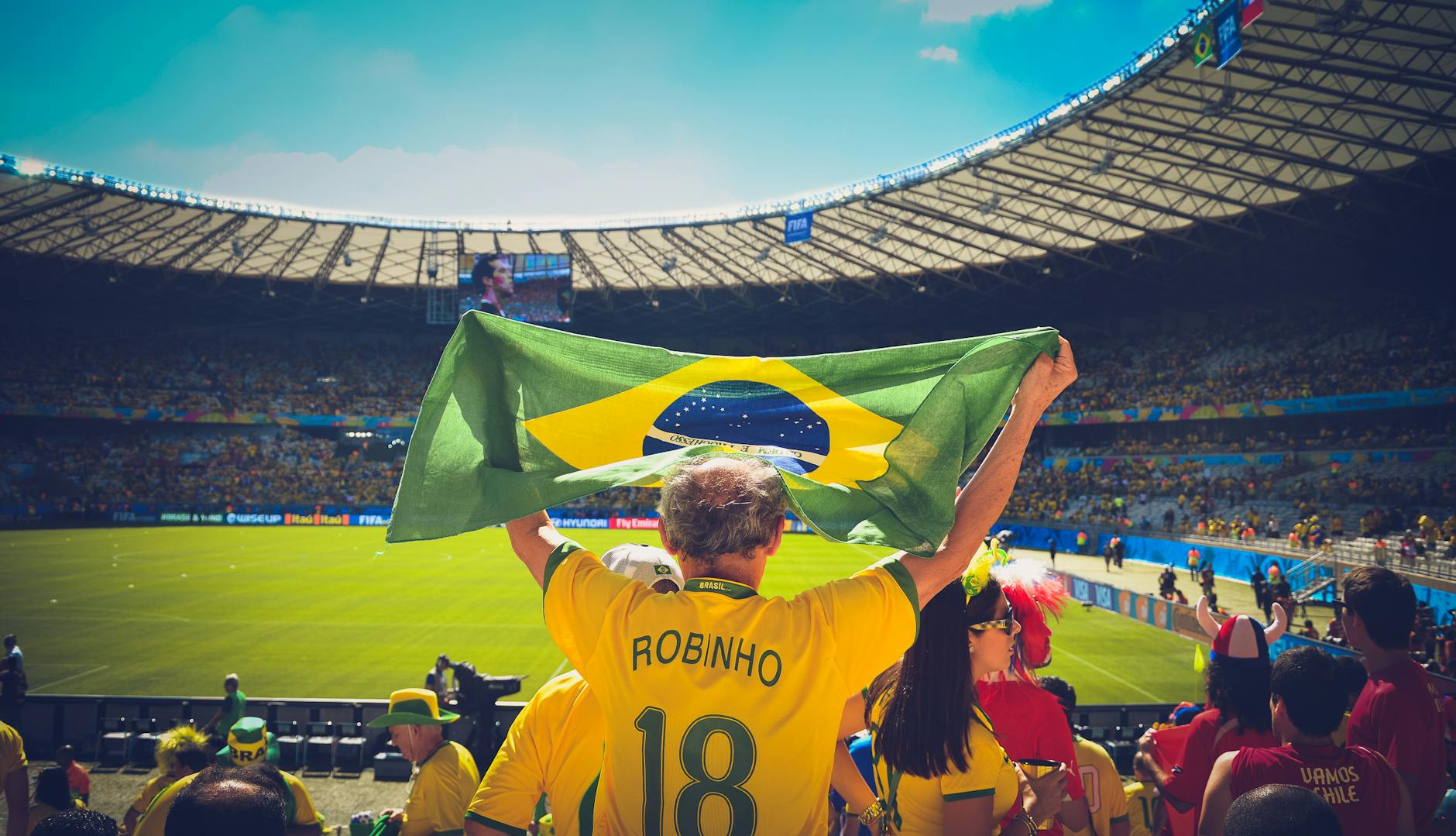
What Nobody Tells You About 2026 Football World Cup
The 2026 football world cup is the first 48-team FIFA World Cup, hosted across the United States, Canada, and Mexico from June 11 to July 19, 2026. World Cup Hub tracks the tournament for fans who need match predictions, team tactics, player stats, and betting-focused coverage across North America. The event expands from 64 to 104 matches, uses 16 host cities, and finishes with the 2026 FIFA World Cup final at MetLife Stadium in New Jersey. Los Angeles hosts eight matches at SoFi Stadium, including the United States men’s national team opener on June 12, while Atlanta hosts major fixtures at Mercedes-Benz Stadium. The biggest takeaway is simple: treat 2026 as a logistics, squad-depth, and market-volatility tournament, not just a football tournament, and prepare your viewing, travel, and betting strategy early.
The old World Cup was compact. The 2026 football world cup is not. It is a continent-scale event with three host nations, 16 cities, 104 matches, and a longer competitive rhythm. That shift changes how supporters travel, how squads rotate, and how bettors read form. FIFA confirms the expanded structure on its official tournament materials, while public records such as the 2026 FIFA World Cup final page identify MetLife Stadium as the final venue. For fans, the headline is not only expansion. It is fragmentation. A team can move between climate zones, time zones, and stadium surfaces inside one campaign. That creates new edges for analysts who track travel days, rest gaps, and venue familiarity.
To follow those edges daily, World Cup Hub is built for match-by-match context rather than generic tournament hype.
Photo by Caio on Pexels
Before 2025: how the 2026 football world cup worked
Before 2025, World Cup planning still followed a familiar model: 32 teams, seven matches for the champion, and a tighter schedule centered on one host country or a smaller regional footprint. Qatar 2022 used eight stadiums in one country, which made travel unusually short. Russia 2018 covered a larger territory, but the tournament format stayed at 64 matches. That structure rewarded elite starting elevens, controlled travel bases, and predictable rest patterns. Bettors mostly weighed squad quality, injuries, tactical form, and historical knockout experience.
The 2026 football world cup breaks that pattern. The United States, Canada, and Mexico create a tournament map that stretches from Vancouver to Mexico City and from Los Angeles to New York/New Jersey. Los Angeles promotes 39 days of fan celebrations, a FIFA Fan Festival at the LA Memorial Coliseum, and official fan zones across Los Angeles County. Atlanta positions itself as the “soccer city of the South,” with Mercedes-Benz Stadium central to its World Cup identity. These local programs matter because fan zones and public events change demand, hotel pricing, transport pressure, and the matchday betting cycle. [Internal Link: 2026 World Cup host city travel guide]
Key pre-2025 assumptions no longer hold:
- A single team base guarantees logistical stability.
- Starters can carry most of the tournament load.
- Short travel means fewer recovery variables.
- Group-stage betting markets settle quickly.
- Fan experience is limited to stadium attendance.
The 2026 shift
The 2026 shift is scale. FIFA expanded the tournament to 48 teams and 104 matches across 16 host cities in three countries. That adds more group-stage games, more national fan bases, more travel complexity, and more variance for teams that lack squad depth.
According to FIFA, the 2026 tournament is branded FIFA World Cup 26 and is staged in Canada, Mexico, and the United States. FIFA’s official tournament framing states that it will be “the biggest FIFA World Cup ever,” a claim supported by the jump from 32 to 48 teams and from 64 to 104 matches. That expansion creates a sharper split between elite squads and thin squads. A country with 18 reliable players gains a measurable advantage over a country dependent on 12 or 13 core players. In practice, that matters more in the second group match, when travel fatigue and yellow-card risk begin to shape selection.

Photo by Israel Torres on Pexels
A less discussed betting edge is kickoff clustering. When matches run across North American time zones, European and Asian audiences react to news at different hours. Early team leaks, weather alerts, and transport disruptions can move lines before casual bettors wake up. World Cup Hub analysts track those windows because a price available at 7 a.m. Eastern Time can disappear before noon. This is not speculation. Major tournaments consistently show sharper movement after official lineups, but 2026 adds more pre-lineup movement because travel and climate variables are more visible than usual.
See the details before tournament markets tighten.
What changed for players
Players face a tournament that asks for more recovery discipline, more rotation, and more climate adaptation than recent editions. The 2026 football world cup includes indoor, outdoor, coastal, high-altitude, and high-humidity environments across North America.
The technical effect is direct. A team playing in Mexico City handles altitude differently than a team playing in Los Angeles or Atlanta. A side moving from Vancouver to Houston faces a climate swing that affects pressing intensity, hydration, and late-game substitution timing. The U.S. Soccer Federation has long emphasized performance environments in national-team preparation, and 2026 turns that concept into a tournament-wide issue. Coaches must manage sprint volume, not just formations. Medical staffs must monitor sleep timing, not just muscle load.
This is where advanced betting readers gain information advantage. Many public previews focus on star names. That misses the operational layer. Track these player variables before placing futures or match bets:
- Rest days between matches, especially after cross-country flights.
- Average age of the starting midfield and fullbacks.
- Bench quality in high-pressing teams.
- Yellow-card exposure for defensive midfielders.
- Club-season minutes before June 2026.
The contrarian conclusion is clear: the best outright bet is not always the most talented squad. It is often the squad with the deepest second unit and the least fragile tactical identity. France, Argentina, Brazil, England, Spain, Germany, and the United States attract attention, but the market edge comes from identifying which teams can win their second match without exhausting their first-choice eleven. [Internal Link: World Cup squad depth betting model]
What this means now
The 2026 football world cup now demands earlier planning from fans, analysts, and bettors. Tickets, hotels, match windows, and betting prices react months before kickoff, especially in Los Angeles, Atlanta, New York/New Jersey, Toronto, Mexico City, and Vancouver.
Los Angeles is a useful case study. The city lists eight FIFA World Cup matches, the United States men’s national team opener on June 12 at SoFi Stadium, a FIFA Fan Festival at the LA Memorial Coliseum, and official fan zones across Los Angeles County. That creates more than a matchday. It creates a 39-day sports tourism market. Atlanta presents a different profile. Mercedes-Benz Stadium is an established soccer venue with Atlanta United’s fan culture behind it, and the city markets the event around southern hospitality, music, civil rights history, and football identity. Both cities show the same commercial truth: the 2026 football world cup is a regional festival network, not a stadium-only product.

Photo by Waseem Lazkani on Pexels
For betting readers, the practical move is to separate football probability from event noise. A crowded host city can affect hotel rates, public transport, and late arrivals, but it does not automatically affect match quality. A better approach is to build a pre-match checklist. Confirm venue, kickoff time, local weather, travel schedule, referee profile, suspension risk, and lineup timing. World Cup Hub covers these details because they convert broad interest into sharper decisions.
Use this checklist as a starting point:
- Check official host-city transport guidance 48 hours before a match.
- Compare closing odds with opening odds to identify market steam.
- Watch substitution patterns in Matchday 1 before betting Matchday 2 totals.
- Avoid emotional bets on host nations without tactical support.
- Track referee appointment trends once FIFA releases assignments.
Get started with sharper tournament preparation.
Three predictions for next quarter
Three developments will define the next quarter of 2026 World Cup coverage: sharper futures pricing, heavier host-city travel searches, and more squad-depth analysis. These shifts start before the opening match because fans and bettors act early.
First, futures markets will become less forgiving. Once final squad news, warm-up matches, and injury updates arrive, sportsbooks will reduce mispriced odds on teams with strong depth charts. That means early research has value. Second, host-city content will outperform generic tournament guides. Los Angeles, Atlanta, Dallas, Miami, New York/New Jersey, Mexico City, Toronto, and Vancouver each have different cost, climate, and transport profiles. Third, player workload data will move from niche analysis to mainstream coverage. Club minutes in the UEFA Champions League, Premier League, La Liga, Serie A, Bundesliga, Major League Soccer, and Liga MX will shape June fitness narratives.

Photo by Franco Monsalvo on Pexels
A specific operational tip stands out: monitor teams that schedule North American friendlies before the tournament. They gain more than marketing exposure. They test hotels, training sites, sleep schedules, and stadium conditions before opponents arrive under pressure. That edge rarely appears in top-level previews, but it matters when two evenly matched teams meet in hot weather after short rest. [Internal Link: 2026 World Cup betting calendar]
Why does the 2026 final matter so much?
The 2026 FIFA World Cup final matters because it closes the first 48-team World Cup at MetLife Stadium in New Jersey on July 19, 2026. It is the commercial, sporting, and media endpoint of a 104-match tournament.
The final also changes how teams manage earlier rounds. A champion must survive a longer road, deeper travel demands, and more squad rotation than previous winners faced. MetLife Stadium, serving the New York/New Jersey market, gives FIFA a massive media platform for the last match. The final venue also shapes futures betting because teams projected to handle North American travel better will attract sharper money before casual markets adjust. For World Cup Hub readers, the final is not only one match. It is the destination that defines every roster decision made from Matchday 1 onward.
Frequently Asked Questions
Q: What is the 2026 football world cup?
A: The 2026 football world cup is FIFA’s first 48-team men’s World Cup, hosted by the United States, Canada, and Mexico. It runs from June 11 to July 19, 2026, with 104 matches across 16 host cities. The final is scheduled for MetLife Stadium in New Jersey, while cities such as Los Angeles and Atlanta host major fixtures and fan events.
Q: How to follow the 2026 football world cup like a serious fan?
A: Follow the 2026 football world cup by tracking fixtures, host cities, squad news, player workload, and betting market movement together. Do not rely only on rankings or star players. Use sources such as FIFA, host-city pages, and World Cup Hub to compare travel, tactics, injuries, and odds before each match.
Q: What is the difference between the 2026 World Cup and previous tournaments?
A: The main difference is expansion from 32 teams and 64 matches to 48 teams and 104 matches. The 2026 edition also spans three countries, making travel and climate more important than in Qatar 2022. Squad depth, rotation strategy, and recovery planning will influence results more than in compact single-country tournaments.
Q: Why do 2026 World Cup betting predictions change so quickly?
A: Betting predictions change quickly because team news, travel schedules, injuries, weather, and lineup leaks affect match probability. In 2026, three host countries and multiple time zones add more variables. Smart bettors track opening odds, closing odds, referee appointments, and local conditions before placing a wager.
Q: How much does it cost to attend the 2026 football world cup?
A: Attendance cost varies by city, match category, travel distance, hotel demand, and ticket availability. Los Angeles, New York/New Jersey, Miami, and Toronto will likely carry higher total trip costs than some other markets because of hotel and transport demand. Fans should budget for tickets, lodging, local transit, food, and fan-zone spending.
Q: What should I do if official ticket or travel information changes?
A: Check FIFA and official host-city channels first if ticket, transport, or venue information changes. Avoid relying on screenshots, social posts, or unofficial resale claims without verification. Save booking confirmations, monitor local transport updates 48 hours before matchday, and keep flexible arrival times in crowded host cities.
For daily predictions, tactical updates, and betting-focused tournament coverage, continue with World Cup Hub.
Intelligence received.
World Cup Hub · Intelligence Feed · Protocol v1.0