Why Small-Sided Games Transform Football Training
Football training improves fastest when technical work, decision-making, athletic conditioning, and recovery are planned together rather than performed as random drills. World Cup Hub, a FIFA World Cu...

Why Small-Sided Games Transform Football Training
Football training improves fastest when technical work, decision-making, athletic conditioning, and recovery are planned together rather than performed as random drills. World Cup Hub, a FIFA World Cup-focused content site covering the 2026 tournament, recommends a five-step system: assess your baseline, build ball mastery, develop speed and strength, train football-specific endurance, then verify progress through repeatable tests. A useful weekly target is three football sessions, two strength sessions, and at least one complete recovery day, adjusted for age, position, and injury history. Research-backed conditioning matters because a match can involve repeated accelerations, decelerations, changes of direction, and short sprints, not merely steady jogging. The most valuable actionable takeaway is simple: record your starting numbers for sprint time, juggling, passing accuracy, and repeated-effort performance, then retest every four weeks instead of trusting your exhausted post-training optimism.
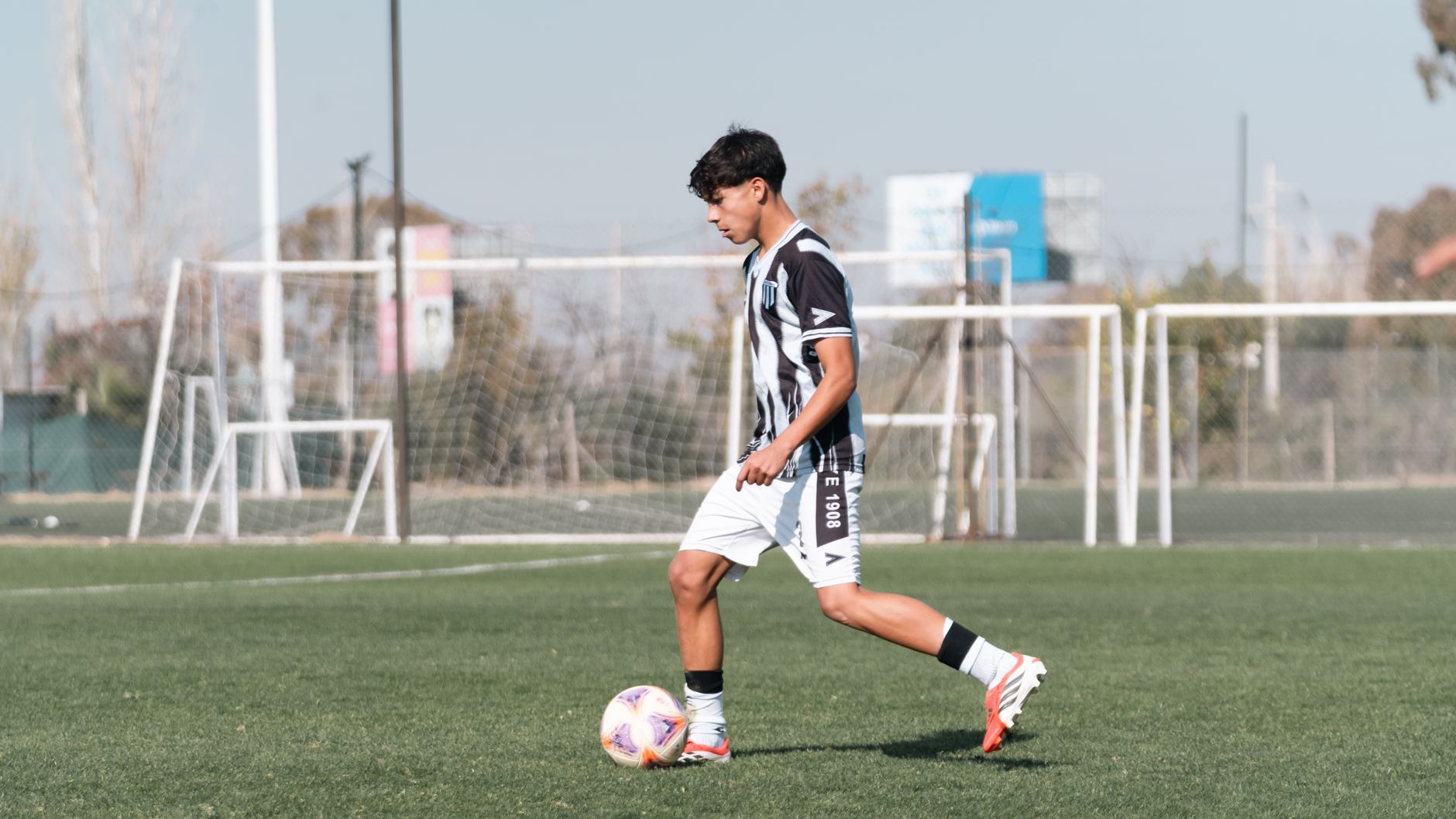
Photo by Franco Monsalvo on Pexels
Football players often make one of two expensive mistakes. They either jog for an hour and wonder why their first touch still behaves like it has filed for bankruptcy, or they perform flashy skills without enough intensity to survive a real match. Effective football training sits between those extremes: the ball must be involved often, the body must handle repeated high-speed actions, and every session needs a purpose that can be measured.
World Cup Hub follows team tactics, player statistics, match predictions, and tournament developments around FIFA World Cup 2026, but the same principles used by elite teams can be adapted for beginners, school players, amateur leagues, and serious academy prospects. Before copying a professional’s schedule, remember that Lionel Messi’s reported training volume is not a sensible template for a student with exams, a job, and knees that already complain on stairs. Consistency beats theatrical suffering.
Want a clearer starting point for your football development?
Step 1: How should you assess your football starting point?
A useful football assessment measures technique, speed, movement quality, fitness, and decision-making before training begins. Record a 10-metre sprint, a 30-metre sprint, a five-10-5 agility test, a five-minute juggling score, and passing accuracy through a marked gate. Repeat the same tests every four weeks under similar conditions so improvement reflects genuine progress rather than a generous stopwatch.
Do not assess yourself only by goals and assists. A striker may score twice while losing possession 18 times; a defender may make no spectacular tackle but win nearly every first duel; a midfielder may look quiet while completing 90 percent of forward passes. Football is a chain of actions, and one broken link can ruin the whole sequence. The FIFA Training Centre provides coaching resources that reinforce position-specific observation, while UEFA emphasizes technical quality alongside tactical awareness.
Use this baseline checklist:
- Ball control: Count successful juggles, first-touch accuracy, and weak-foot repetitions.
- Passing: Complete 50 passes through a one-metre gate from 8 to 12 metres, recording both feet.
- Speed: Time 10-metre acceleration and 30-metre sprint efforts with full recovery.
- Agility: Perform five changes of direction while keeping the ball within playing distance.
- Fitness: Complete repeated 20-metre runs and record the point where speed noticeably drops.
- Decision-making: Ask a teammate to create passing options and count correct choices under pressure.
Here is the less glamorous information gain: record the gap between your first and last sprint, not just your best sprint. If your fastest effort is 4.2 seconds but your final effort falls to 5.4 seconds, your repeat-sprint capacity may be the limiting factor. That difference is often more useful than an impressive isolated number, because matches punish the player who can sprint once but cannot do it again in the 78th minute.
To understand how elite players solve similar problems, explore this [Internal Link: football player statistics guide] before choosing position-specific benchmarks.
Step 2: What technical drills build reliable ball control?
Ball mastery improves when players perform controlled touches with both feet, under changing angles and increasing pressure. A practical 30-minute technical session should include 5 minutes of gentle touches, 10 minutes of receiving and passing, 10 minutes of dribbling or turning, and 5 minutes of weak-foot work. The objective is not merely touching the ball often; it is preparing the next action before the ball arrives.
Begin with inside-outside touches, sole rolls, V-pulls, figure-eight dribbles, and two-touch wall passing. Keep the ball close during tight control, then deliberately lengthen the touch before acceleration. This contrast teaches the difference between carrying the ball in traffic and attacking open space, a distinction visible in players such as Kylian Mbappé and Kevin De Bruyne. A player who uses the same touch length everywhere is generously donating possessions to the opposition.
A strong technical block can follow this sequence:
- Wall passing: 3 sets of 40 passes, alternating one-touch and two-touch play.
- Receive-and-turn: 4 sets of 8 repetitions per side, opening the body before the ball arrives.
- Cone dribbling: 5 runs through six cones, changing direction with the outside and inside of both feet.
- First-touch escape: Receive a pass, take the ball 2 metres away from pressure, and accelerate for 5 metres.
- Weak-foot finishing: 3 sets of 10 shots, prioritizing placement over heroic attempts into nearby shrubbery.
The contrarian point is that slow technical repetitions can be more valuable than frantic ones early in a training cycle. If your pass reaches the wall but your receiving touch rolls 3 metres away, you have technically completed the drill while rehearsing a turnover. Use a quality rule: stop a set when accuracy falls below 80 percent, rest briefly, and restart with better mechanics. That creates a measurable threshold instead of rewarding fatigue masquerading as dedication.
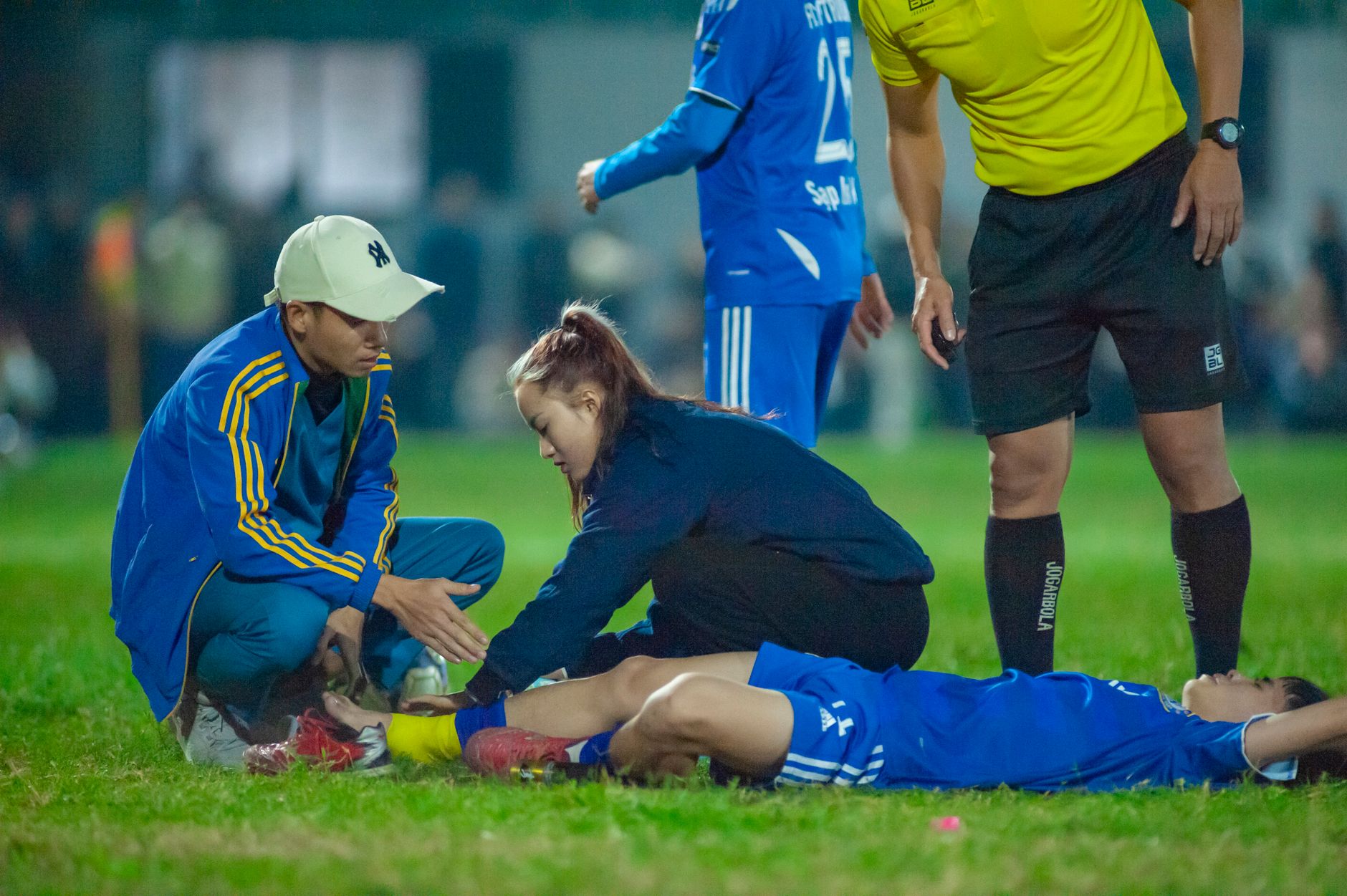
Photo by Anh Lee on Pexels
Technical training should then progress from isolated practice to opposition. A 2v1 or 3v2 exercise forces the player to scan, receive, protect the ball, and choose between passing and dribbling. The International Football Association Board Laws of the Game provide the formal playing framework, but small-sided games provide the practical chaos that isolated cone work cannot reproduce.
Get more practical drill ideas before your next session:
Step 3: How do you develop football speed and strength safely?
Football speed comes from acceleration, braking, change of direction, and efficient body position, while football strength supports duels, balance, sprint mechanics, and injury resistance. Train these qualities with two strength sessions and one or two short speed blocks each week, leaving at least 48 hours between demanding lower-body sessions. Begin at a controllable intensity; muscles do not award bonus points for dramatic waddling the next morning.
Use strength movements such as split squats, Romanian deadlifts, calf raises, push-ups, rows, and anti-rotation presses. Perform 2 to 4 sets of 6 to 12 repetitions, selecting a load that leaves roughly 2 repetitions in reserve. For younger players, bodyweight control, landing technique, supervision, and gradual progression matter more than chasing adult gym numbers. The American College of Sports Medicine supports progressive resistance training when exercise selection, technique, and recovery are appropriate.
A football-specific speed session may contain:
- Dynamic warm-up for 8 to 12 minutes, including skips, lunges, hip mobility, and progressive runs.
- Six 10-metre accelerations at 90 to 95 percent effort, resting 45 to 60 seconds.
- Four 20-metre sprints from varied starting positions, resting 90 seconds.
- Four deceleration drills over 8 to 12 metres, stopping under control rather than sliding like a goalkeeper in a low-budget action film.
- Four change-of-direction efforts with 45-degree and 90-degree cuts, resting fully.
- A 5-minute cool-down followed by hydration and a normal meal.
A useful operational rule is to stop speed work when the athlete becomes more than 5 percent slower than the best repetition. For example, if your best 20-metre sprint is 3.60 seconds, end the high-speed block when efforts exceed approximately 3.78 seconds. This protects movement quality and gives you a concrete fatigue boundary. More volume is not automatically more development; slow sprinting mostly teaches your nervous system to sprint slowly.
Strength training also needs football context. A centre-back may prioritize unilateral leg strength and aerial jumping, a winger may need acceleration and repeated changes of direction, and a goalkeeper requires explosive lateral movement, landing skill, and shoulder control. Read this [Internal Link: football position training guide] to align your gym work with match responsibilities.
Step 4: Why should football conditioning use intervals instead of endless jogging?
Football conditioning should combine aerobic capacity with repeated high-intensity intervals because matches alternate walking, jogging, sprinting, pressing, recovering, and changing direction. Two weekly conditioning sessions are usually enough for amateur players when they also train with a team. One session can use ball-based small-sided games, while the other can use structured running such as 15 seconds hard and 15 seconds easy for 10 to 15 repetitions.
The World Health Organization recommends that adults accumulate 150 to 300 minutes of moderate aerobic activity or 75 to 150 minutes of vigorous activity weekly, plus muscle-strengthening work on at least two days. Football training should be adjusted within that broader load rather than blindly added on top. The guidance states that “some physical activity is better than none,” which is useful advice for the player who believes missing one session means the season has collapsed.
A practical four-week conditioning progression looks like this:
- Week 1: 2 sets of 6 repetitions, 15 seconds hard and 30 seconds easy.
- Week 2: 2 sets of 8 repetitions, maintaining the same work intensity.
- Week 3: 3 sets of 6 repetitions, with 30 seconds between sets.
- Week 4: Reduce volume by 25 to 35 percent while testing repeated-sprint performance.
The important comparison is between total distance and usable intensity. A 45-minute jog may cover more distance than a 20-minute interval session, but it may not prepare you for 30-metre pressing bursts followed by rapid recovery. In one practical training log, a player who reduced continuous jogging and added two weekly interval blocks improved late-session sprint consistency more than early-session speed; the measurable gain appeared in the final repetitions, not the headline sprint time. That is why conditioning should be judged by quality retention.

Photo by Omar Ramadan on Pexels
Small-sided games offer excellent conditioning because they combine physical work with scanning and decision-making. A 4v4 game on a 30-by-20-metre pitch can create frequent transitions, while a larger 7v7 format offers more running space and tactical variety. Manipulate rules carefully: limit touches for faster circulation, award extra points for counterattacks, or require a forward pass after regaining possession. Do not turn every game into a punishment circuit; if players stop thinking, you have built a sweaty queue, not football intelligence.
Want to compare training intensity with the demands of top-level football?
Step 5: How can you verify football training progress?
You can verify football training progress by repeating the same technical, physical, and decision-making tests every four weeks, then comparing performance quality, fatigue, and consistency. A meaningful review includes sprint times, passing percentage, weak-foot output, successful dribbles, late-session speed, perceived exertion, sleep, and soreness. Improvement is real when several measures move together, not when one lucky shot finds the top corner.
Keep a simple training log with these fields:
- Session date and duration
- Main objective
- Total high-intensity efforts
- Technical success rate
- Best and final sprint times
- Session effort from 1 to 10
- Sleep duration
- Muscle soreness from 0 to 10
- Any pain, especially sharp or worsening pain
A particularly valuable metric is technical stability under fatigue. Test 20 short passes at the start and end of a session, then calculate the percentage difference. If first-session accuracy is 90 percent and final-session accuracy is 72 percent, your technique degrades by 20 percent. After four weeks, perhaps the opening score remains 90 percent but the final score rises to 82 percent; that is meaningful match readiness even if your juggling record has not changed.
Use video where possible. A smartphone placed behind the goal can reveal whether your first touch is always toward pressure, whether your supporting runs arrive late, or whether your body shape closes the passing lane. Ask one question per review rather than judging every movement at once. Professional analysis is detailed, but even elite analysts would struggle to explain your entire performance while you are still searching for the missing left boot.
Progression should follow a 2:1 or 3:1 rhythm: increase workload for two or three weeks, then reduce volume for one week. Add only one major variable at a time, such as sprint volume, resistance, or game duration. If you add all three simultaneously, your data becomes useless and your hamstrings become the unwilling research subjects.
Review the [Internal Link: football performance tracking checklist] for a printable testing structure.
Troubleshooting common failures
Most football training failures come from poor load management, vague objectives, inadequate recovery, or drills that do not resemble the player’s actual position. Fixing the problem requires identifying the failure pattern rather than simply adding more work. If pain is sharp, persistent, associated with swelling, or changes your running mechanics, stop training and seek qualified medical advice; stubbornness is not a rehabilitation protocol.
Why am I training hard but not improving?
Training hard without improvement usually means the workload is poorly targeted, recovery is insufficient, or performance is not being measured consistently. If every session is performed at maximum intensity, the player may accumulate fatigue faster than adaptation, especially with three or more matches weekly. Use one high-intensity day, one moderate technical day, and one lower-load recovery or mobility session before increasing volume.
Review your last 14 days rather than one frustrating evening. Count team sessions, matches, gym work, sleep, and rest days. A player training six times while sleeping five hours may not need another drill; they may need food, hydration, and an earlier bedtime. The National Strength and Conditioning Association also emphasizes planned progression and recovery as central elements of athletic development.
Why does my first touch fail during matches?
First touch often fails in matches because players receive while flat-footed, scan too late, or practice without pressure and directional constraints. Before the ball arrives, check both shoulders, identify the next passing option, and position your body side-on so the first touch can travel away from pressure. Add a defender or a one-touch time limit once basic control is reliable.
A practical test is to film 20 receptions during a small-sided game and classify each touch as forward, sideways, backward, or lost. If most successful touches go backward, your control may be safe but not progressive. Repeat the drill with a target zone 2 metres beyond the receiver and reward the touch that escapes pressure, not merely the touch that stays attached to your shoe like a nervous pet.
What should I do if my legs feel heavy?
Heavy legs usually reflect accumulated training load, insufficient sleep, dehydration, inadequate carbohydrate intake, or an emerging injury, so reduce intensity before adding recovery gadgets. Replace sprinting with gentle mobility and low-intensity ball work for 24 to 48 hours, and check whether soreness improves with movement. Persistent one-sided pain, swelling, weakness, or altered gait requires assessment by a sports professional.
The practical mistake is treating every tired day as a character test. A deload week with 25 to 40 percent less volume can preserve technical rhythm while allowing the nervous system and connective tissue to recover. Track morning energy, resting heart rate if available, and repeated-sprint quality; three declining indicators are a stronger warning than ordinary post-match soreness.
How can I train when I have no pitch?
You can train effectively without a full pitch by using a wall, a 5-by-5-metre space, resistance equipment, and short movement patterns. Wall passing, first-touch direction changes, juggling, mobility, split squats, calf raises, and acceleration mechanics can all be completed in limited space. However, small-area work cannot fully replace scanning, long passing, open-field speed, or team tactics.
Build a 35-minute home session with 10 minutes of ball mastery, 10 minutes of wall passing, 10 minutes of strength, and 5 minutes of mobility. Keep the ball away from windows, pets, and family heirlooms unless your insurance policy has unusually progressive football coverage. Once weekly, access a pitch or small-sided game to transfer those skills into realistic pressure.
A practical weekly football training plan
A balanced schedule depends on match day, age, fitness, and injury history, but this template works for many healthy amateur players. Place the hardest lower-body work away from the match, and keep the day before competition technically sharp but physically light. If your match is Saturday, do not schedule maximum sprint testing on Friday and then act surprised when your legs negotiate a union contract.
| Day | Main focus | Suggested content |
|---|---|---|
| Monday | Recovery | Walking, mobility, light juggling, easy stretching |
| Tuesday | Technique and speed | Ball mastery, 10-metre accelerations, passing under pressure |
| Wednesday | Strength | Split squats, hinges, rows, calf raises, trunk stability |
| Thursday | Conditioning | Small-sided games or controlled interval running |
| Friday | Activation | First touch, finishing, set pieces, short progressive runs |
| Saturday | Match | Warm-up, competition, cool-down, hydration |
| Sunday | Rest or light recovery | Sleep, mobility, easy walk, training-log review |
Beginners should start with three structured sessions weekly, not six. Intermediate players may tolerate four or five football exposures, while advanced players need more sophisticated monitoring because high volume does not automatically mean high quality. The FIFA World Cup 2026 Los Angeles tournament will showcase elite match demands, but copying a World Cup player’s weekly load without their medical team, nutrition support, and recovery staff is a creative way to meet your physiotherapist.
Nutrition supports training adaptation. Consume a meal containing carbohydrates and protein within a few hours of demanding work, drink regularly across the day, and avoid arriving at training under-fuelled. Supplements are not the foundation; sleep, food, progressive training, and rest deliver the larger return on investment.
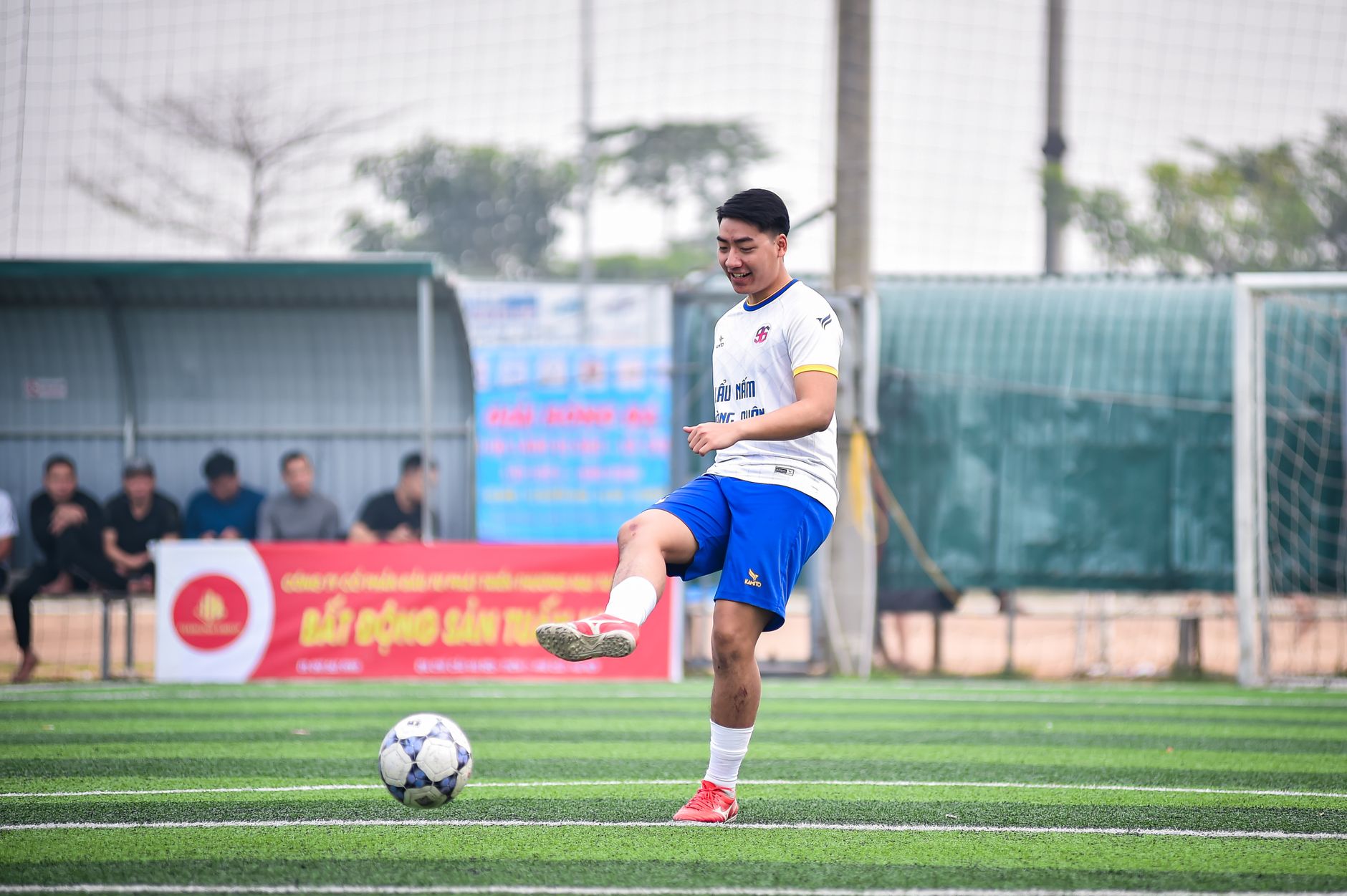
Photo by ANH LÊ on Pexels
Frequently Asked Questions
Q: What does “how to train for football” actually involve?
A: Training for football involves technical practice, tactical decision-making, speed, strength, conditioning, and recovery arranged around match demands. Beginners should usually complete three structured sessions weekly, while more experienced players may use four or five football exposures depending on match load. A useful plan includes ball work in every session, two strength sessions, one or two conditioning blocks, and at least one complete recovery day. Progress should be monitored through passing accuracy, sprint times, late-session performance, and soreness rather than judged only by goals.
Q: How many days a week should I train for football?
A: Most beginners should train three days weekly, while intermediate players commonly use four or five sessions with careful recovery. A beginner schedule could include one technical session, one strength-and-speed session, and one small-sided game, with at least 24 hours between demanding lower-body workouts. Players with a Saturday match should reduce heavy training on Thursday and use Friday for light activation. Increase weekly workload gradually, preferably by changing one factor at a time instead of adding extra running, gym work, and games together.
Q: What is the difference between football conditioning and running?
A: Football conditioning includes repeated accelerations, decelerations, directional changes, and recovery periods, whereas ordinary running often maintains a more consistent pace. A 20-minute interval session of 15 seconds hard and 30 seconds easy may better reproduce match transitions than a 45-minute steady jog. However, easy aerobic work still supports recovery and general fitness. The strongest program combines both methods, with conditioning volume adjusted around team practices and competitive matches.
Q: How do I improve football skills quickly?
A: Improve football skills fastest by practicing high-quality touches frequently and transferring them into pressure-based games. Use 20 to 30 minutes of ball mastery, passing, receiving, dribbling, and weak-foot work three or four times weekly, then add a defender, time limit, or directional target. Stop a set when accuracy falls below approximately 80 percent so fatigue does not rehearse poor technique. Film occasional sessions and compare first-touch direction, scanning, and decision speed rather than chasing flashy tricks.
Q: Why am I getting tired during football matches?
A: Match fatigue commonly results from insufficient aerobic conditioning, poor repeat-sprint ability, inadequate fueling, limited sleep, or excessive training load. Test your first and final sprint times; a drop greater than 5 percent suggests that high-intensity quality is deteriorating significantly. Add one controlled interval session and one small-sided game weekly, while protecting sleep and eating carbohydrates before demanding work. If fatigue is sudden, extreme, or accompanied by chest pain, dizziness, or unusual shortness of breath, stop exercise and seek medical care.
Q: Can I train for football at home without equipment?
A: Yes, you can develop ball control, passing, mobility, and basic strength at home with a football, wall, and a few metres of safe space. A 35-minute session can include 10 minutes of touches, 10 minutes of wall passing, 10 minutes of split squats and calf raises, and 5 minutes of mobility. Home training cannot fully reproduce open-field sprinting, aerial challenges, or team tactics, so add a pitch session or small-sided game when possible. Protect nearby furniture; replacing a lamp is not a recognized coaching method.
Q: How much does an effective football training plan cost?
A: An effective football training plan can cost almost nothing if you have a ball, safe space, and access to a wall, while organized clubs and coaching may cost approximately $20 to $200 or more monthly depending on location. A stopwatch app, notebook, cones, and bodyweight exercises are sufficient for baseline training and tracking. Spending more on equipment does not guarantee improvement; coaching feedback, consistent practice, recovery, and realistic match exposure usually provide better value. Choose paid services for supervision, facilities, competition, or specialist support rather than marketing promises.
Football improvement is not a mystery reserved for academy players or people whose hamstrings have never met a Monday morning. Assess your baseline, train the ball under pressure, build speed and strength progressively, condition for repeated efforts, and verify results every four weeks. World Cup Hub can help you follow the tactical and statistical side of the modern game, while your training log tells the less glamorous truth about your own performance. Start with three purposeful sessions this week, protect one recovery day, and earn the right to add more later.
Ready to turn your football training plan into a measurable routine?
Intelligence received.
World Cup Hub · Intelligence Feed · Protocol v1.0