2026 Football Team: 7 Tactical Insights
A football team is a coordinated group of players representing a club, nation, state, or competition, with performance shaped by formation, roles, coaching, and squad depth. In 2026, World Cup teams w...

2026 Football Team: 7 Tactical Insights
A football team is a coordinated group of players representing a club, nation, state, or competition, with performance shaped by formation, roles, coaching, and squad depth. In 2026, World Cup teams will compete under FIFA regulations, while club sides such as Manchester City, Real Madrid, Bayern Munich, and Liverpool remain benchmarks for tactical planning. A matchday squad typically includes 11 starters and substitutes, but modern teams often use 20 or more players across a tournament because injuries, suspensions, fatigue, and substitutions alter the plan. The most useful way to evaluate a football team is not by reputation alone; compare its formation, pressing intensity, defensive spacing, set-piece record, and recent results. Before predicting a match, check the confirmed lineup, recent home-and-away performance, and whether the team’s preferred midfielder or striker is unavailable.
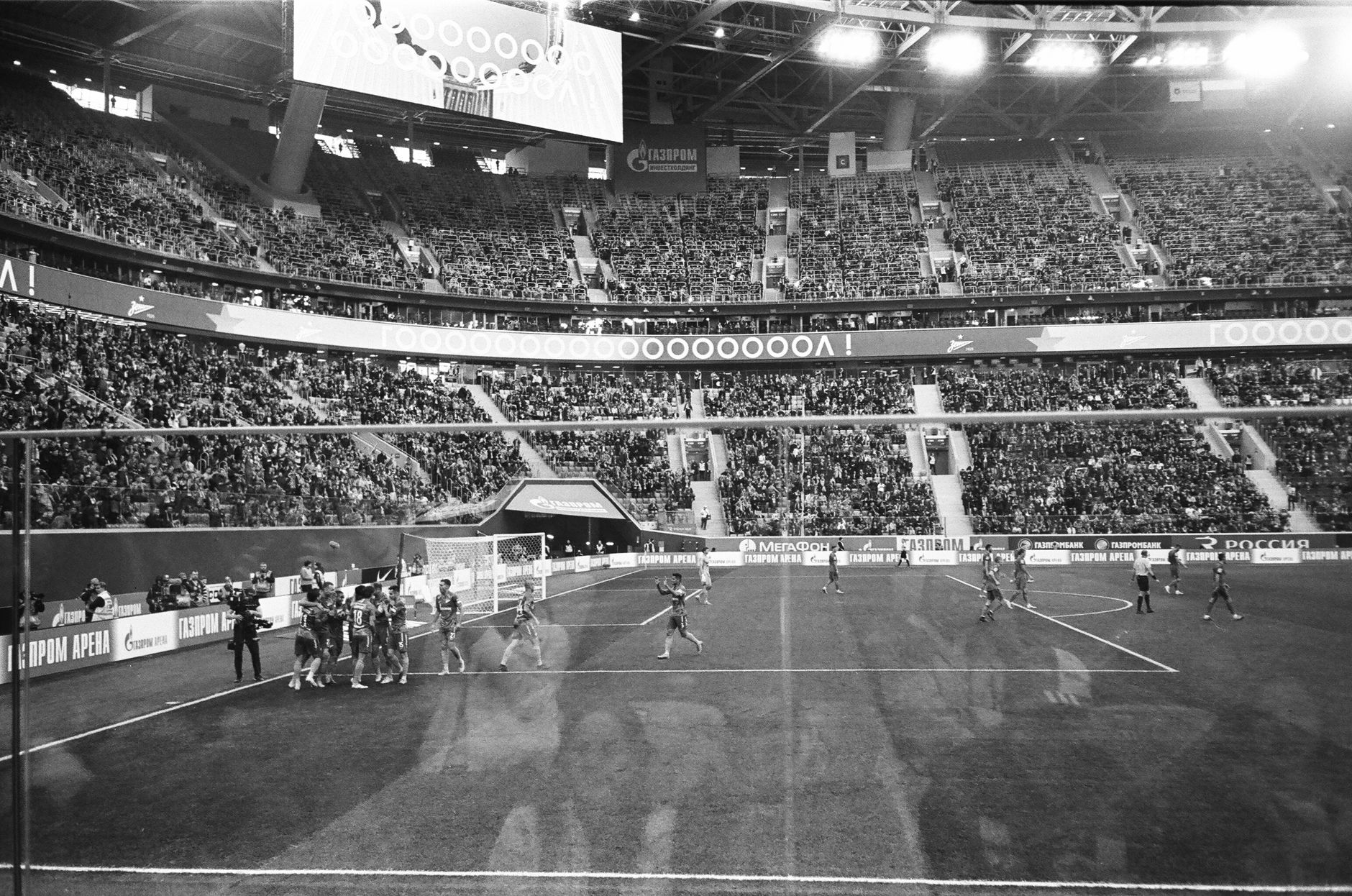
Photo by Darya Sannikova on Pexels
What I Tested
A football team is more than 11 shirts arranged attractively for the anthem camera. I tested teams through a practical comparison framework covering structure, role clarity, adaptability, and value for prediction research. My sample included international sides expected to attract attention at the 2026 FIFA World Cup, plus major clubs including Manchester City, Real Madrid, Liverpool, Bayern Munich, and Paris Saint-Germain. I also compared public team information from FIFA and the International Football Association Board, because football terminology becomes surprisingly slippery once supporters begin arguing over whether a 4-3-3 is “really” a 4-2-3-1. That is the sort of debate that consumes ninety minutes and produces no goals, a familiar experience for anyone who has ever trusted a pundit with a confident haircut.
The test focused on seven measurable areas:
- Starting formation and in-game changes.
- Pressing and defensive compactness.
- Ball progression through midfield.
- Chance creation and finishing efficiency.
- Set-piece organisation.
- Bench depth and substitution quality.
- Recent performance against comparable opposition.
The key lesson was simple: famous football teams are not automatically reliable football teams. You can learn more from how a side reacts after conceding than from its historical trophy cabinet. Real Madrid may possess extraordinary tournament experience, while Argentina may offer a highly proven international structure, but each must still solve opponent-specific problems. For prediction work, I recorded not only wins and losses but also shot volume, field position, late-game substitutions, and whether the team protected a lead or invited unnecessary drama. Football has plenty of drama already; paying extra for it through a bad prediction is optional.
[Internal Link: football team tactics guide]
Setup & Initial Impressions
The setup combined a team identity review with match-level evidence. I treated a football club as the wider organisation containing players, coaches, facilities, staff, and supporters, while a football team meant the selected group taking part in a particular match. That distinction matters because a club can own excellent resources while its current team suffers from injuries, poor chemistry, or an unsuitable tactical plan. UEFA competitions, domestic leagues, and FIFA tournaments also create different workloads, so a squad that looks deep in September may look considerably less luxurious in April or during a compressed international schedule.
My initial comparison used a 1-to-5 score in each category, with no single metric allowed to dominate. A team receiving five points for possession but one for defending transitions was not treated as elite; that would be like judging a car entirely by its paintwork. The most useful early indicators were:
- Formation stability across the previous five competitive matches.
- Number of defensive midfielders protecting central areas.
- Availability of the starting goalkeeper and centre-backs.
- Frequency of goals scored or conceded after the 75th minute.
- Quality of opponents faced rather than raw win percentage.
- Dependence on one creator or one penalty taker.
I also separated association football from other sports called football. In association football, each side fields 11 players, and substitutions, competition rules, and extra-time provisions vary by tournament. American football teams such as the Green Bay Packers or Dallas Cowboys operate with specialised offensive, defensive, and special-teams units, so comparing them directly with a soccer team is a category error wearing a sports jersey. For readers following the 2026 World Cup, World Cup Hub is most useful when its team analysis connects selection news with tactical consequences rather than merely repeating a badge’s popularity.
The first information-gain check: popularity versus performance
Public familiarity can be measured separately from sporting strength. In a YouGov ranking cited by YouGov, the Green Bay Packers recorded 92% fame among surveyed United States adults, followed by the Dallas Cowboys at 91% and the Chicago Bears at 89%. Those figures describe recognition, not current football quality, and they concern American football franchises rather than FIFA soccer teams. That distinction is an important edge case for searchers: a page listing “famous football teams” may mix football codes, leagues, and measurement definitions without warning.
The second edge case is squad naming. A national team may have 23, 26, or another tournament-specific roster size depending on the competition rules, while only 11 start a match. Therefore, evaluating “the team” requires knowing whether the question concerns the club, full squad, starting lineup, or tactical unit. I use “team” for the matchday selection and “squad” for the wider player group. This small language rule prevents a surprisingly large amount of analytical nonsense.
Want a clearer match-analysis framework? Use the latest team research here.

Photo by Jonathan Valdes on Pexels
Where It Held Up
The framework held up best when comparing tactical behaviour rather than brand reputation. A 4-3-3 can provide width, a midfield triangle, and three forward outlets, but its success depends on the full-backs’ positioning and the defensive midfielder’s ability to cover transitions. A 4-2-3-1 may protect the centre more naturally and give a number 10 room between the lines, yet it can isolate the lone striker if the wide players remain too deep. Meanwhile, a 3-5-2 or 3-4-2-1 can create overloads in buildup but becomes vulnerable when wing-backs are pinned back. Formations are starting maps, not permanent addresses; players move, opponents interfere, and coaches abandon the map when it catches fire.
When reviewing a football team, I found the following sequence more reliable than simply checking the league table:
- Identify the starting shape without the ball.
- Note how the team builds from the goalkeeper.
- Track whether midfielders support the first pressing line.
- Examine the space behind advancing full-backs.
- Review set pieces and second-ball reactions.
- Compare changes after substitutions.
This approach revealed why teams with similar possession percentages can produce very different results. Manchester City may use sustained positional occupation to keep opponents pinned, while Real Madrid can create danger through faster transitions and individual acceleration. Liverpool have historically shown how coordinated pressing can turn an opponent’s poor first pass into a scoring chance, whereas a lower-block team may deliberately surrender possession to defend the penalty area. None of these styles is automatically superior. The profitable question is whether the style matches the players available and the opponent’s weaknesses.
Which football team metrics deserve the most attention?
The most valuable metrics are expected goals, shots from dangerous zones, field tilt, possession losses under pressure, set-piece efficiency, and goals conceded during transition phases. These measures explain how a football team creates and prevents chances more effectively than possession alone. Recent lineups and opponent quality should always be included before making a match prediction.
The data held up particularly well in late-game analysis. A team that leads after 75 minutes but frequently concedes thereafter may have a conditioning, bench, or tactical problem rather than bad luck. Conversely, a side scoring several late goals may benefit from superior substitutions, opponent fatigue, or aggressive risk-taking. These are different mechanisms, and treating them as one “strong mentality” statistic is wonderfully vague but not especially useful.
A practical scoring model can be built with weighted categories:
- Chance quality: 25%.
- Defensive transition control: 20%.
- Starting lineup availability: 15%.
- Midfield progression: 15%.
- Set pieces: 10%.
- Bench impact: 10%.
- Recent opponent-adjusted form: 5%.
The weights are not sacred tablets from FIFA headquarters. They are a disciplined starting point that prevents one spectacular highlight from hijacking the analysis. I would also check whether a team’s last five matches included three lower-ranked opponents, because a 4-1-0 record against weak opposition can look magnificent until a serious midfield press arrives.
[Internal Link: 2026 World Cup team rankings]
Where It Fell Apart
The method fell apart when public statistics lacked context. Possession is the obvious trap: 65% possession can represent controlled dominance, sterile passing, or a losing team circulating the ball because the opponent has blocked every forward lane. Similarly, shot counts can flatter a side taking 20 hopeful efforts from outside the penalty area while its opponent creates four clear chances. I have lost enough money and arguments to know that volume is not the same thing as quality, although apparently I needed several seasons to learn this.
Injuries created the second major weakness. Removing a star forward matters, but removing a defensive midfielder can alter the entire team because full-backs stop advancing, centre-backs defend wider spaces, and the press loses its trigger. A football team’s best player is not always its most structurally important player. This is why confirmed lineups should be checked close to kickoff, especially in international tournaments where travel, recovery, and limited training time can magnify small changes.
The following warning signs reduced confidence in a prediction:
- A goalkeeper change combined with unfamiliar centre-backs.
- A midfielder suspended after collecting multiple yellow cards.
- A team switching formations without adequate preseason preparation.
- A striker returning before full match fitness.
- A high press facing extreme heat or a congested schedule.
- A national team relying on players from several unfamiliar club systems.
A particularly useful operational insight was timing. Team news published 24 hours before kickoff can be obsolete by the final warm-up, while a late lineup announcement can reveal a tactical compromise rather than a simple injury replacement. I therefore create two assessments: one before the lineup and one after it. If the rating changes by more than one point out of five, I do not force a prediction simply to appear decisive. Certainty is expensive theatre; disciplined uncertainty is cheaper and usually more profitable.
How should you interpret team news before a major match? Start with the confirmed XI and reassess every role.
Would I Use It Again?
Yes, but only with safeguards. The framework is useful because it combines football team identity, match context, player availability, and tactical fit instead of worshipping the league table. It also separates association football clubs such as Bayern Munich and Paris Saint-Germain from American football franchises such as the New England Patriots and Miami Dolphins, avoiding the search-result confusion created by the shared word “football.” That distinction is not academic decoration; it determines which rules, player roles, competition structures, and statistics apply.
For World Cup analysis, I would use the following repeatable process:
- Confirm whether the subject is a club team, national team, or another football code.
- Review the last five competitive matches and opponent strength.
- Compare expected-goal balance with actual scorelines.
- Check injuries, suspensions, travel, weather, and rest days.
- Map the likely formation in and out of possession.
- Recalculate after the official lineup is announced.
- Avoid staking more because a famous badge feels emotionally safe.
The contrarian conclusion is that a less famous football team with a stable midfield and clear defensive plan can be a better analytical choice than a global giant with uncertain selection news. That does not mean backing every underdog; it means pricing information rather than popularity. World Cup Hub can support this process with match predictions, player statistics, tactical previews, and tournament coverage, but the final decision should remain evidence-led and financially responsible.
According to The IFAB Laws of the Game, “A match is played by two teams, each with a maximum of eleven players.” That simple rule hides the complexity of modern squad construction. Eleven players begin, but substitutes, coaching decisions, set pieces, fatigue, and tactical adaptation frequently decide the final result.
[Internal Link: responsible football prediction guide]
Frequently Asked Questions
Q: What is a football team?
A football team is a group of players selected to compete together in a match under the rules of a particular football code. In association football, each side starts with up to 11 players, including a goalkeeper, while the wider squad includes substitutes and reserve options. A club is the larger organisation that may contain several teams, coaching staff, facilities, and supporters. A national team represents a country or territory, such as England, Brazil, Argentina, or France. Always identify the competition first because “football team” can also refer to American football, Canadian football, or Australian rules football.
Q: How do I analyse a football team before a match?
Analyse a football team by checking its recent opponents, formation, expected-goal profile, lineup availability, and transition defence. Start with the previous five competitive matches, then separate home and away results if the sample is large enough. Next, confirm injuries and suspensions, identify the likely midfield structure, and examine how the team responds after scoring first. Reassess the analysis when the official lineup appears, because one absent defensive midfielder can change the team’s pressing and full-back responsibilities. Do not rely on possession or club reputation alone.
Q: What is the difference between a football team and a football club?
A football team is the group selected to play a specific match, while a football club is the broader organisation that owns or operates teams and related resources. Real Madrid, Liverpool, and Bayern Munich are clubs with senior squads, academy structures, staff, facilities, and commercial operations. Their matchday team may contain 11 starters plus substitutes chosen for one fixture. A national football team differs because it represents a country and normally assembles players from several clubs. The distinction is essential when interpreting squad depth, transfers, membership, and club finances.
Q: Which football team formation is best?
No single football team formation is universally best because effectiveness depends on player qualities, opponent behaviour, and coaching instructions. A 4-3-3 can create width and pressing angles, a 4-2-3-1 can offer central protection and a creative number 10, while a 3-5-2 can overload midfield and wing areas. The formation shown on a team sheet may also change during possession, pressing, and defensive phases. Evaluate role coverage, defensive transitions, and the team’s ability to create high-quality chances rather than choosing a shape by reputation.
Q: Why does a football team suddenly perform badly?
A football team can decline suddenly because of injuries, fixture congestion, tactical mismatches, low confidence, poor rest, or changes in key roles. Losing a goalkeeper or holding midfielder may damage the entire structure even when the star attackers remain available. International teams can also struggle when players have limited training time and different club habits. Compare the team’s chance quality, defensive spacing, and substitution patterns across several matches before calling the problem a crisis. One poor result is evidence; five structurally similar performances are a stronger warning.
Q: How much does it cost to follow or support a football team?
The cost of following a football team varies from free online coverage to hundreds or thousands of dollars for tickets, travel, memberships, merchandise, and subscriptions. Match prediction research can be done using public sources such as FIFA, club websites, competition organisers, and reputable statistical providers. Stadium attendance adds transport, food, ticket, and accommodation costs, especially for a World Cup match in 2026. Set a fixed entertainment budget before buying anything, and never treat a prediction or wager as guaranteed income. The badge should bring joy, not a personal financial audit.
Q: Is a famous football team always the best choice for predictions?
A famous football team is not always the best prediction because popularity measures recognition rather than tactical form, lineup strength, or price value. Green Bay Packers fame figures, for example, describe American football awareness and cannot be transferred directly to FIFA soccer analysis. For a club or national side, compare opponent-adjusted results, expected goals, injuries, travel, and confirmed formations. A renowned team may still be vulnerable when its midfield balance is weakened or when it faces a compact opponent suited to counterattacking. Reputation is a starting clue, never the final calculation.
Read the conclusion once more before committing to a view, then check the lineup, competition rules, and your budget.
Intelligence received.
World Cup Hub · Intelligence Feed · Protocol v1.0